
RC-1 Loop Station: A Comprehensive Manual Guide (Updated 04/28/2026)
Today’s date is 04/28/2026 08:39:47. This guide details the Boss RC-1, capable of recording loops as short as 0.25 seconds, and supports external footswitch control via the FS-5U.
The Boss RC-1 Loop Station is a remarkably intuitive and powerful tool for musicians seeking to explore the world of looping. This compact pedal allows for the creation of layered performances, spontaneous compositions, and practice tools, all at your feet. It’s designed for both beginners taking their first steps into looping and experienced performers looking for a reliable and versatile addition to their setup.
Unlike complex digital audio workstations, the RC-1 prioritizes immediacy and hands-on control. Its straightforward interface encourages experimentation, allowing you to quickly capture ideas and build arrangements in real-time. The pedal’s ability to record loops as short as 0.25 seconds opens up creative possibilities, from percussive textures to intricate rhythmic patterns.
Furthermore, the RC-1 isn’t limited to internal control. The inclusion of a STOP/UNDO port allows for seamless integration with external footswitches, such as the FS-5U, granting expanded control over loop playback and manipulation. This flexibility makes the RC-1 a truly adaptable instrument, ready to respond to your unique performance style.
Understanding the RC-1’s Basic Functions
The Boss RC-1 centers around a core set of functions, designed for intuitive loop creation. The primary controls include the Record/Play button, initiating loop capture and playback, and the Stop/Undo button, halting the loop and reverting to the previous state. These are the foundational elements of the looping process.
Loop length is determined during the initial recording phase; the RC-1 can capture loops as brief as 0.25 seconds, offering versatility for various musical styles. The pedal operates in either Free Run or Fixed mode. Free Run continuously restarts the loop upon completion, while Fixed plays the loop once and stops.
The Memory function allows for storage of loops for later recall, expanding performance possibilities. Additionally, the STOP/UNDO port facilitates external control via a footswitch like the FS-5U, providing hands-free operation. Understanding these basic functions is crucial for unlocking the RC-1’s full potential and building complex arrangements.
Powering Up and Initial Setup
The Boss RC-1 Loop Station requires a 9V DC power supply (sold separately) for operation. Connect the power adapter to the DC-IN jack located on the pedal’s rear panel. Do not use a non-regulated power supply, as this could damage the unit. Once powered, the RC-1 will display the Boss logo and initialize.
Before recording, connect the RC-1 to your instrument (guitar, bass, etc.) using a standard ¼-inch instrument cable. Connect the RC-1’s output to your amplifier or PA system using another ¼-inch cable. Ensure all connections are secure to prevent signal loss or unwanted noise.
For expanded control, you can connect an FS-5U foot switch to the STOP/UNDO port. This allows for hands-free loop stopping and undoing. Verify all connections before proceeding to loop recording fundamentals. Proper setup ensures optimal performance and prevents potential issues during operation.
Loop Recording Fundamentals
The core function of the RC-1 is loop recording. Press the [LOOP] button to begin recording. The pedal will immediately start capturing audio from your instrument. Play the phrase you want to loop; the RC-1 will record until you press the [LOOP] button again. This creates a single loop.
The initial recording length determines the loop’s duration. The RC-1 can record loops as short as 0.25 seconds, offering flexibility for various musical styles. After the first loop is created, subsequent passes will overdub onto the existing loop, adding layers.
Understanding the timing is crucial. Consistent rhythm and accurate starts and stops will result in tighter, more professional-sounding loops. Experiment with different loop lengths and phrases to discover the RC-1’s capabilities. The [STOP] button halts playback and recording.
Recording Your First Loop: A Step-by-Step Guide
Step 1: Connect your instrument (guitar, keyboard, etc.) to the RC-1’s input. Ensure your amplifier or PA system is connected to the RC-1’s output. Step 2: Press the [LOOP] button. The indicator light will flash, signifying recording mode.
Step 3: Play a short musical phrase. Aim for a clean, rhythmic performance. The RC-1 will record until you press the [LOOP] button a second time. This completes the initial loop.
Step 4: The loop will now play continuously. Experiment with playing along with the loop. Step 5: To stop the loop, press the [STOP] button. Remember, the RC-1 can record loops as short as 0.25 seconds, so don’t be afraid to experiment with brevity!
Practice these steps to build confidence and familiarity with the RC-1’s basic operation.
Looping Techniques: Building Complex Arrangements
Once comfortable with basic looping, explore layering techniques. After recording your first loop, press the [LOOP] button again during playback to begin overdubbing. This allows you to add new musical elements on top of the existing loop.
Experiment with different rhythmic patterns and harmonies during overdubbing. Utilize the [STOP] button to halt playback and isolate layers for editing. Consider using an external footswitch (like the FS-5U) connected to the STOP/UNDO port for hands-free control during performance.
Build arrangements incrementally, adding one layer at a time. Don’t be afraid to create short, fragmented loops and combine them for unique textures. Remember the RC-1’s ability to handle loops as short as 0.25 seconds – embrace concise, impactful phrases.
Practice transitioning smoothly between layers to create dynamic and engaging arrangements.
Using the Memory Function for Loop Storage
The Boss RC-1 features onboard memory for storing your created loops, allowing for recall during performances or later editing. To save a loop, first ensure it’s finalized and stopped. Then, press and hold the [WRITE] button while simultaneously pressing one of the numbered [MEMORY] buttons (1-99).
A visual indicator will confirm successful storage. To recall a saved loop, simply press the corresponding [MEMORY] button. The RC-1 will instantly load the loop, ready for playback or further manipulation.
Remember that overwriting a memory location will permanently erase the previously stored loop. Utilize this feature strategically to curate a library of your favorite loops. Regularly back up your loops to an external storage device for added security.
Experiment with organizing loops by genre, tempo, or key for easy access during live sets.
The Importance of Loop Length and Timing
Precise loop length and timing are crucial for creating seamless and musically satisfying loops with the Boss RC-1. Loops that are too short can sound choppy, while excessively long loops may lack rhythmic definition. Aim for loop lengths that align with the musical phrase or bar structure of your composition.
Pay close attention to your initial recording timing. A slightly off-beat start can result in noticeable timing imperfections throughout the loop. Utilize the [TAP TEMPO] function to establish a solid tempo before recording, ensuring rhythmic accuracy.
Consider the “one” beat when initiating your loop. Starting on the downbeat generally provides the most stable and natural-sounding result. Experiment with different loop lengths to discover what best complements your musical style and performance needs.
Mastering timing is key to unlocking the full potential of the RC-1.
Overdubbing: Adding Layers to Your Loops
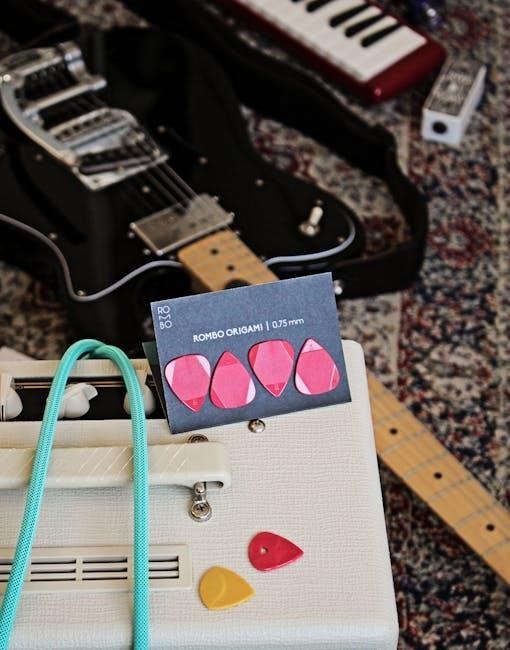
Overdubbing is a powerful technique for building complex arrangements with the Boss RC-1. Once a loop is established, engage the overdub mode to record additional layers on top of the existing loop. Each overdub pass adds another sonic element, creating richer textures and harmonies.
Be mindful of your timing during overdubbing; Any timing discrepancies will be layered onto the existing loop, potentially creating rhythmic inconsistencies. Utilize the [QUANTIZE] feature (discussed later) to correct minor timing errors.
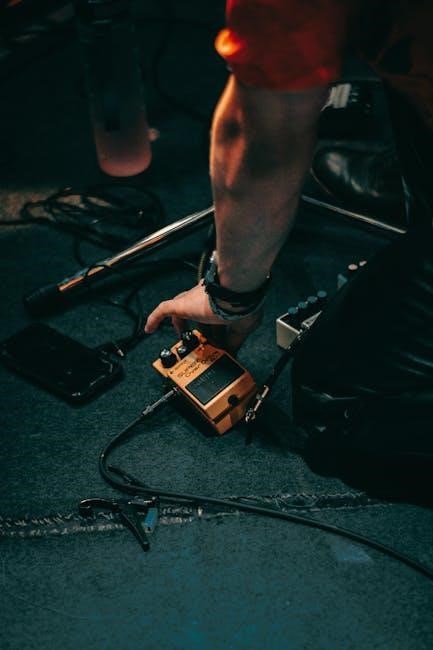
Experiment with different sounds and instruments during overdubbing. The RC-1 allows for endless creative possibilities, from subtle harmonic additions to dramatic rhythmic variations. Remember to control the loop volume during overdubbing to maintain a balanced mix.
Overdubbing transforms a simple loop into a dynamic and evolving musical piece.
Quantize Feature: Correcting Timing Imperfections
The Quantize feature on the Boss RC-1 is invaluable for refining loop timing. It automatically adjusts the timing of newly recorded audio to align with the nearest beat or division within the tempo of the existing loop. This is particularly useful when overdubbing, where slight timing variations are common.
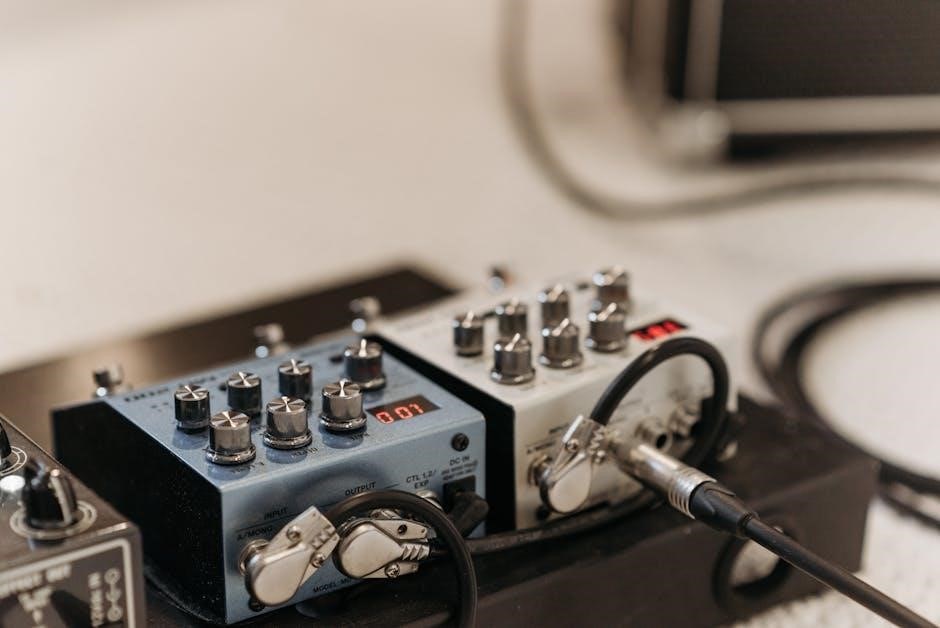
Access the Quantize settings through the RC-1’s menu. You can select different quantization resolutions, such as 1/4 note, 1/8 note, or 1/16 note, depending on the desired level of precision. A finer resolution will result in more accurate timing correction.
While Quantize is effective, excessive use can sound unnatural. Use it judiciously to correct minor imperfections without sacrificing the organic feel of your performance. Experiment with different settings to find the optimal balance between precision and musicality.
Quantize helps achieve tight, professional-sounding loops.
Utilizing the Effects Section
The Boss RC-1 boasts a versatile effects section, allowing you to dramatically shape the sound of your loops. These effects are applied after the loop is recorded, providing creative possibilities for enhancing your performances. Access the effects via the dedicated knob and selector buttons.
The RC-1 offers a range of effects, including reverb, delay, chorus, phaser, and more. Each effect has adjustable parameters, such as depth, rate, and feedback, allowing for fine-tuning to achieve the desired sonic texture. Experimentation is key to discovering unique soundscapes.
Effects can be applied globally to the entire loop or selectively to overdubbed layers. This allows for complex arrangements with varying sonic characteristics. Remember to save your favorite effect settings for quick recall during live performances.
Explore the effects section to unlock the full potential of your loops!
Understanding the Different Effect Types
The RC-1’s effects section provides a diverse palette of sonic tools. Reverb adds spaciousness and depth, simulating different acoustic environments. Delay creates echoes, ranging from subtle repeats to rhythmic patterns. Chorus thickens the sound, producing a shimmering effect.
Phaser introduces swirling, psychedelic textures, while Flanger offers a jet-plane-like whooshing sound. Tremolo modulates the volume, creating a pulsating effect. Pan shifts the sound between the left and right speakers, adding movement.
Lo-fi simulates the warmth and imperfections of vintage recording equipment. Reverse plays the loop backwards, offering unique textural possibilities. Experiment with combining different effects to create complex and evolving soundscapes. Each effect type responds uniquely to parameter adjustments.
Understanding these nuances is crucial for maximizing the RC-1’s creative potential.
External Control with Foot Switches (FS-5U)
Expanding the RC-1’s functionality, the FS-5U foot switch offers hands-free control. Connecting to the STOP/UNDO port on the pedal’s right side, it unlocks additional performance capabilities. Assigning functions like loop start/stop, or track selection, streamlines live performances.
The FS-5U allows for more intuitive operation, freeing you from reaching for the RC-1 itself. This is particularly useful when layering multiple loops or performing complex arrangements. Customization is key; configure the switch to trigger specific actions based on your workflow.
Multiple FS-5U units can be chained together for even greater control, enabling complex sequences and real-time manipulation. Explore different configurations to discover what best suits your playing style. The FS-5U significantly enhances the RC-1’s versatility.
Connecting to Amplifiers and PA Systems
The Boss RC-1 offers versatile connectivity for both practice and performance scenarios. Utilize the 1/4” OUTPUT jacks for connection to guitar amplifiers, keyboard amps, or a full PA system. Stereo operation is supported, providing a wider soundstage and immersive experience.
For direct recording, the RC-1 features a dedicated USB port, enabling seamless integration with your computer and Digital Audio Workstation (DAW). This allows for capturing loops directly into your recording software for further editing and production.
When connecting to a PA system, ensure proper gain staging to avoid clipping or unwanted noise. Experiment with different output levels to find the optimal balance between volume and clarity. Remember to check impedance matching for best results.
Troubleshooting Common Issues
No Sound: Verify all cable connections to your amplifier or PA system. Ensure the RC-1’s volume knob is turned up and not muted. Check the input signal from your instrument is active. Confirm the loop isn’t accidentally set to ‘undo’ mode.
Distorted Sound: Reduce the input gain to prevent clipping. Adjust the output level to match your amplifier’s input sensitivity. Ensure your instrument’s output isn’t excessively hot. Try a different cable to rule out cable-related distortion.
Loop Timing Issues: Utilize the Quantize feature to correct minor timing imperfections. Practice consistent rhythm while recording. Consider using a metronome during loop creation for precise timing. Ensure sufficient loop length for comfortable playing.
USB Connectivity Problems: Verify the USB cable is securely connected. Restart your computer and the RC-1. Update your DAW software to the latest version.
Advanced Techniques: Reverse, Half Speed, and More
Reverse Playback: Experiment with reversing loops for unique textural effects. Access this function through the menu settings, applying it to stored loops or during live playback. This can dramatically alter the sonic character of your creations.
Half-Speed Playback: Reduce the playback speed for a slowed-down, atmospheric sound. This is ideal for creating ambient textures or dramatically altering rhythmic patterns. Combine with effects for further sonic manipulation.
Loop Degradation: Intentionally introduce subtle imperfections during overdubbing to create evolving, organic loops. This adds character and prevents loops from sounding sterile.
Rhythmic Displacement: Slightly offset subsequent loop layers to create polyrhythmic textures. This technique adds complexity and interest to your arrangements. Explore different displacement amounts for varied results.
RC-1 Loop Station Specifications and Memory Capacity
The Boss RC-1 boasts impressive memory capacity for its compact size. It offers approximately 99 loop memories, allowing for extensive storage of musical ideas. Each memory can store a single loop, facilitating quick recall during performance or practice.
Recording Time: The maximum recording time varies depending on the selected memory mode. Standard mode provides ample time for most looping needs, while dedicated mode extends recording duration for longer phrases.
Memory Format: Loops are stored in a proprietary format optimized for the RC-1. Backing up loops to a computer isn’t directly supported, emphasizing the pedal’s self-contained nature.
Power Requirements: The RC-1 operates on 9V DC, with a recommended current draw of 85mA. Battery operation is also possible, offering portability for on-the-go looping sessions.
Resources and Further Learning
Expanding your RC-1 skillset involves exploring various online resources. Boss’s official website provides downloadable manuals, firmware updates, and helpful FAQs addressing common user queries. YouTube is a treasure trove of tutorials, showcasing looping techniques from beginner basics to advanced arrangements.
Dedicated looping communities and forums, like those found on Reddit (r/looping) and Guitar Forums, offer a platform for sharing tips, troubleshooting issues, and discovering new approaches. Many experienced loopers share their patches and performance strategies;
Consider exploring online courses focused on loop-based music production. Platforms like Skillshare and Udemy offer structured learning paths. Experimentation is key; don’t be afraid to explore the RC-1’s features and develop your unique looping style!