
Seiki TV Owners Manual: A Comprehensive Guide
Welcome! This Seiki TV manual offers detailed guidance, covering setup, features, troubleshooting, and safety—ensuring optimal viewing experiences. Explore Seiki’s diverse models!
Seiki televisions represent a commitment to delivering high-quality viewing experiences at accessible price points. Established as a digital innovator, Seiki focuses on integrating modern technology with user-friendly designs. This manual serves as your comprehensive resource for understanding and maximizing the potential of your Seiki TV.
Whether you’ve chosen a standard HD model or a cutting-edge Smart TV, Seiki aims to provide vibrant picture quality and intuitive operation. This guide details everything from initial setup and connecting external devices to navigating the on-screen menu and resolving common issues. We’ll cover essential aspects like picture and sound adjustments, channel management, and advanced features.
Seiki continually strives to improve its products and services, and your feedback is valuable. Please refer to the warranty information for details on support and registration.
Understanding Your Seiki TV Model
Identifying Your Model: Your Seiki TV’s model number (e.g., SE322FS, SE421TT) is crucial for accessing specific support resources and downloading the correct firmware updates. Locate this number on the rear panel of the TV or in your original packaging. Different Seiki models offer varying features, including screen size, resolution (HD, Ultra HD), and Smart TV capabilities.
Key Components: Familiarize yourself with the TV’s physical components – the screen, speakers, input/output ports (HDMI, Component, Composite, Optical Audio), and power connection. Understanding these elements will simplify setup and troubleshooting. Seiki TVs often include a range of connectivity options to accommodate various devices.
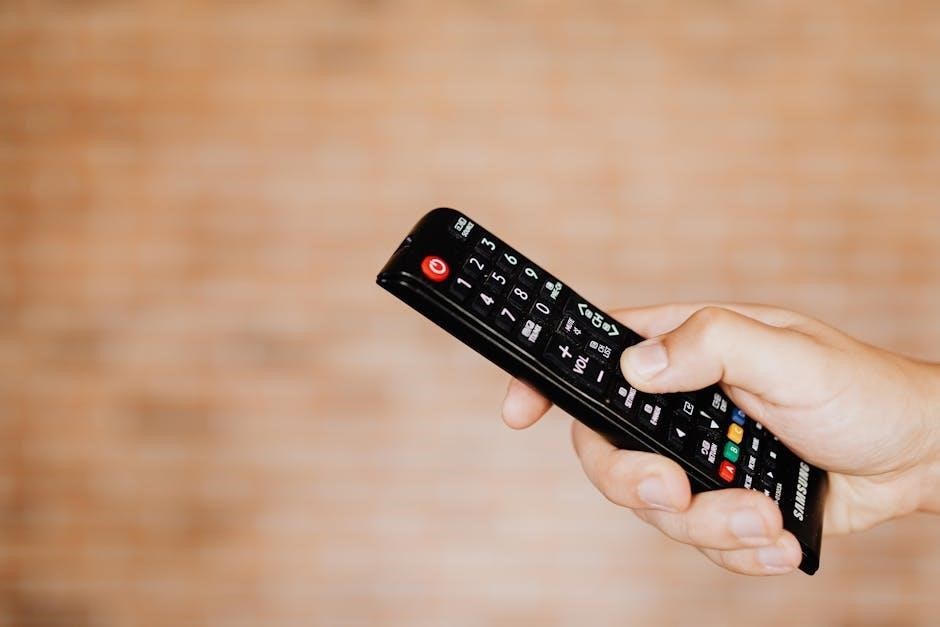
Remote Control Overview: The remote control is your primary interface for controlling the TV. Learn the function of each button, including power, volume, channel, menu navigation, and input selection.

Setting Up Your Seiki TV
Begin with careful unboxing, connecting power and antennas, then link external devices via HDMI, component, or composite connections for optimal viewing!
Unboxing and Initial Setup
Carefully remove your new Seiki TV from the packaging, ensuring all protective materials are removed. Inspect the TV for any physical damage that may have occurred during shipping. Included in the box, you should find the TV itself, a remote control, power cord, and potentially a stand or mounting hardware.
Before connecting any cables, attach the stand securely following the instructions provided. If you plan to wall-mount the TV, consult the separate mounting instructions and ensure you have the appropriate hardware; Once the stand is attached, place the TV on a stable, level surface.
Initial setup involves connecting the power cord and turning on the TV. The first-time setup wizard will guide you through selecting your language, country, and network connection (Wi-Fi or Ethernet, if applicable). Follow the on-screen prompts to complete the initial configuration.
Connecting to Power and Antennas
Power Connection: Locate the power input on the rear of your Seiki TV. Ensure the voltage indicated on the TV matches your household power supply. Connect the provided power cord securely to the TV and then plug it into a grounded electrical outlet. Do not use a damaged power cord.
Antenna Connection: For over-the-air broadcasts, connect a coaxial cable to the “ANT IN” or “RF” input on the TV. Ensure the cable is securely fastened. If you are using an antenna amplifier, connect it to the coaxial cable before connecting it to the TV.
Cable/Satellite Connection: If you have a cable or satellite box, connect a coaxial cable from the box’s output to the “RF” or “Cable In” input on the TV. After connecting, power on the TV and select the appropriate input source using the remote.
Connecting External Devices
Expanding your Seiki TV’s capabilities involves connecting external devices like Blu-ray players, gaming consoles, and streaming devices. Locate the input ports on the rear or side of your TV. These typically include HDMI, Component, and Composite video inputs, alongside corresponding audio outputs.
Prioritize HDMI for the highest quality audio and video. Connect your device using an HDMI cable and select the corresponding HDMI input on your TV. For older devices, utilize Component or Composite connections, remembering to match the color-coded cables to the correct ports.
Audio connections can be made via Optical or RCA cables, depending on your device’s outputs and your audio system’s inputs. Ensure all connections are secure for optimal performance.
HDMI Connections
HDMI (High-Definition Multimedia Interface) is the preferred method for connecting devices to your Seiki TV, delivering both high-definition video and audio through a single cable. Locate the HDMI ports on your TV – typically labeled HDMI 1, HDMI 2, and so on.
Connect one end of the HDMI cable to the HDMI output on your device (Blu-ray player, game console, etc.) and the other end to an available HDMI input on your TV. Using the TV remote, select the corresponding HDMI input source from the input menu.
For optimal picture quality, ensure you are using a high-speed HDMI cable. Some Seiki TVs support HDMI-CEC, allowing control of connected devices with the TV remote.
Component Video Connections

Component video offers a high-quality analog connection, utilizing three separate cables for video signals: Y (luminance), Pb (blue difference), and Pr (red difference). These connections are typically color-coded green, blue, and red, respectively. Locate the component video inputs on your Seiki TV, often labeled as “Component In.”
Connect the corresponding cables from your source device (DVD player, older game consoles) to the matching color-coded inputs on your TV. Remember that component video carries only video; you’ll need separate audio connections (RCA) for sound.
After connecting, select the “Component” input source on your TV using the remote control. Ensure cables are securely connected for a stable picture.
Composite Video Connections
Composite video is a basic analog connection, transmitting video signals through a single RCA cable, typically yellow. While offering lower quality than component or HDMI, it’s useful for older devices. Locate the composite video input on your Seiki TV, usually labeled “AV In” or with a yellow RCA jack.
Connect the yellow RCA cable from your source device (VCR, older game consoles) to the corresponding yellow input on your TV. Remember, composite carries only video; separate RCA cables (red and white) are needed for audio.
Select the “AV” or “Composite” input source on your TV using the remote. A clear, secure connection is vital for optimal picture quality, though it won’t match higher-definition options.
Audio Connections (Optical & RCA)
Seiki TVs offer versatile audio outputs for connecting to soundbars, receivers, or speakers. Optical audio (TOSLINK) delivers digital audio with high fidelity, using a fiber optic cable. Connect it to the optical output on your TV and the corresponding input on your audio system for superior sound.
RCA audio connections (red and white jacks) provide analog audio. These are commonly used with older devices or when optical isn’t available. Connect the red and white RCA cables from your TV’s audio output to the corresponding inputs on your audio system.
Ensure proper cable connections and select the correct audio output setting in your TV’s menu for optimal sound performance.
Navigating the Seiki TV Menu
Explore the Seiki TV menu for picture, sound, channel, and advanced settings! Customize your viewing experience with intuitive controls and options.
Main Menu Overview
Accessing the Main Menu is typically done via the ‘Menu’ button on your Seiki remote control. The main menu serves as the central hub for all TV settings and functionalities. Upon entering, you’ll encounter several primary categories, often visually represented with icons for easy navigation.
These categories generally include Picture Settings, allowing adjustments to brightness, contrast, color, and sharpness. Sound Settings provide control over equalizer settings and sound modes. Channel Management enables auto-scanning, manual tuning, editing, and deletion of channels.
Furthermore, you may find sections for Network Settings (for Smart TV models), System Settings (covering language, time, and parental controls), and potentially Input Settings to manage connected devices. The menu layout and specific options can vary slightly depending on your Seiki TV model.
Picture Settings
Picture Settings allow you to customize the visual experience on your Seiki TV. Access these settings through the main menu. Key adjustments include Brightness, controlling the overall light level, and Contrast, defining the difference between light and dark areas. Fine-tune the Color and Tint to achieve accurate and vibrant hues.
Sharpness Control impacts the clarity and detail of the image; higher settings can sometimes introduce artifacts. Many Seiki models offer preset picture modes like ‘Standard,’ ‘Vivid,’ ‘Cinema,’ and ‘Game,’ providing optimized settings for different content.
Advanced options may include Color Temperature (adjusting the warmth or coolness of the image) and Dynamic Backlight (automatically adjusting brightness based on the scene). Experiment with these settings to find the optimal picture quality for your viewing preferences and environment.
Brightness and Contrast
Brightness and Contrast are fundamental Picture Settings on your Seiki TV. Brightness controls the overall luminance of the screen; increasing it makes the image lighter, while decreasing it darkens it. Adjust this to ensure details are visible in both dark and bright scenes without washing out the picture.
Contrast determines the difference between the lightest and darkest parts of the image. Higher Contrast values create a more dramatic picture with deeper blacks and brighter whites, but excessive Contrast can lead to loss of detail in shadows and highlights.
Properly balancing Brightness and Contrast is crucial for optimal image quality. Start with default settings and make small adjustments until you achieve a natural and comfortable viewing experience.
Color and Tint Adjustments
Color and Tint settings refine the hues displayed on your Seiki TV. The Color control adjusts the intensity of all colors, impacting the vibrancy and saturation of the image. Increasing Color makes the picture more vivid, while decreasing it results in a more muted appearance. Be cautious not to oversaturate, as this can lead to unnatural-looking colors.
Tint, also known as hue, adjusts the balance between green and magenta tones. This is particularly useful for correcting skin tones or ensuring accurate color reproduction. Subtle adjustments to Tint can significantly improve the overall realism of the picture.
Fine-tune these settings to achieve a color balance that suits your preferences and the content you are viewing.
Sharpness Control
Sharpness control on your Seiki TV adjusts the clarity and definition of edges within the picture. Increasing Sharpness enhances the detail, making lines and textures appear more defined. However, excessive Sharpness can introduce unwanted artifacts, such as ringing or halos around objects, diminishing the natural look of the image.
Lowering the Sharpness softens the picture, reducing these artifacts but potentially making the image appear less detailed. The optimal Sharpness level depends on the source material and your personal preference. High-definition content generally requires less Sharpness adjustment than standard-definition content.
Experiment to find a balance that provides a clear, detailed picture without introducing distracting artifacts;
Sound Settings
Sound Settings on your Seiki TV allow you to customize the audio output to match your preferences and the content you’re watching. Access these settings through the main menu to adjust various parameters. Key options include volume control, muting, and selecting different sound modes like Standard, Movie, Music, or Sports, each optimized for specific audio experiences.
Further customization is available through Equalizer Settings, enabling precise control over different frequency bands – bass, treble, and mid-range – to fine-tune the sound signature. Explore these options to enhance dialogue clarity, boost bass for action scenes, or create a balanced audio profile.
Proper sound settings significantly improve your viewing enjoyment.
Equalizer Settings
Equalizer Settings within your Seiki TV’s sound menu provide granular control over the audio frequencies. This allows for precise tailoring of the sound to your liking and the specific content being played. Typically, you’ll find sliders or preset options to adjust the levels of different frequency bands, including bass, mid-range, and treble.
Boosting the bass frequencies can enhance the impact of action movies and music, while increasing treble can improve dialogue clarity. Experimenting with these settings is key to finding the optimal balance. Some Seiki models may offer pre-set equalizer profiles, such as “Rock,” “Classical,” or “Jazz,” for quick adjustments.
Remember to make small adjustments and listen carefully to the changes.
Sound Modes
Seiki TVs often include a variety of pre-configured Sound Modes designed to optimize the audio experience for different types of content. These modes automatically adjust the equalizer and other audio settings to deliver the best possible sound for specific scenarios.
Common Sound Modes include “Standard,” “Movie,” “Music,” “Sports,” and “News.” “Movie” mode typically emphasizes dynamic range and clarity for a cinematic experience, while “Music” mode focuses on reproducing accurate and balanced audio. “Sports” mode often boosts the bass and enhances crowd noise for a more immersive sporting event experience.
Experiment with each mode to determine which best suits your preferences and the content you are watching. These presets offer a convenient way to quickly enhance your audio without manual adjustments.
Channel Management

Seiki TVs offer robust Channel Management features, allowing users to easily organize and customize their viewing experience. Auto Program Scan automatically searches for available over-the-air channels, storing them in the channel list. For specific channels not found during the auto scan, Manual Channel Tuning enables direct input of channel frequencies.
Once channels are scanned, you can utilize Channel Editing to rename channels for easy identification, or Channel Deletion to remove unwanted channels from the list. Many Seiki models support creating favorite channel lists for quick access. Regularly updating your channel list ensures you have the most current channel lineup.
Refer to your specific model’s menu for detailed instructions on accessing and utilizing these channel management tools.
Auto Program Scan
Auto Program Scan is the simplest method for finding available digital channels on your Seiki TV. Access this feature through the Channel menu, typically labeled as “Auto Scan” or “Auto Tuning”. The TV will automatically begin scanning all available frequencies for broadcast signals.
During the scan, ensure your antenna or cable connection is securely connected. The scan duration varies depending on the number of channels in your area. Once completed, the TV will display a list of found channels. You may need to re-sort or edit the channel list after the scan.
If the initial scan doesn’t find all expected channels, repeat the scan or consider adjusting your antenna position. Some models offer options for scanning specific frequency ranges.
Manual Channel Tuning
Manual Channel Tuning allows you to add channels not found during an Auto Program Scan, or to fine-tune your channel lineup. Access this option within the Channel menu, usually labeled “Manual Tuning” or “Channel Add”. You’ll need to know the specific channel number and frequency for the desired station.
Enter the channel number and frequency (VHF or UHF) using the on-screen keyboard or number pad. The TV will then attempt to lock onto that specific channel. Repeat this process for each channel you wish to add manually.
This method is useful for adding local channels or those with weak signals that the auto scan might miss. Accurate frequency information is crucial for successful manual tuning.
Channel Editing and Deletion
Channel Editing and Deletion features allow customization of your channel list for a streamlined viewing experience. Within the Channel Management menu, select the “Edit Channels” or “Channel List” option. This displays a list of all currently saved channels.
To delete a channel, highlight it and select the “Delete” or “Remove” option. Confirm your selection when prompted. To reorder channels, use the arrow keys or designated buttons to move them to your preferred positions within the list.
These functions help eliminate unwanted channels and organize your favorites for quick access. Regularly editing your channel list ensures a clean and efficient browsing experience.

Advanced Features & Troubleshooting
Explore smart functionalities, remote control usage, and solutions for common issues like no picture, sound, or connectivity problems—enhancing your Seiki TV experience!
Smart TV Functionality (If Applicable)
If your Seiki TV model includes smart capabilities, you’ll unlock a world of streaming entertainment and online services. Access popular apps like Netflix, YouTube, and more directly on your TV. The interface is designed for intuitive navigation using the remote control.
Connecting to your home Wi-Fi network is essential for utilizing these features. Follow the on-screen prompts in the network settings menu to establish a connection. Once connected, explore the app store to download and install additional applications.
Regular software updates are crucial for maintaining optimal performance and security. The TV will automatically check for updates, but you can also manually initiate a search within the settings menu. These updates often include new features and bug fixes, ensuring a smooth and enjoyable smart TV experience.
Using the Remote Control
Your Seiki TV remote control is your primary interface for navigating menus, adjusting settings, and controlling playback. Familiarize yourself with the key buttons, including power, volume, channel, input source, and the navigation pad. The menu button provides access to the TV’s settings and features.
The numeric keypad allows for direct channel entry. Utilize the dedicated buttons for streaming services (if applicable) for quick access. Some remotes feature voice control functionality; refer to the specific model’s instructions for setup and usage.
Ensure proper battery installation for optimal performance. Replace batteries when the remote becomes unresponsive or exhibits limited range. Avoid exposing the remote to extreme temperatures or moisture. Regularly clean the remote with a soft, dry cloth to maintain its functionality.
Common Issues and Solutions
Experiencing issues with your Seiki TV? Here are some common problems and their solutions. No Picture: Check power connections, input source selection, and ensure the TV isn’t muted. No Sound: Verify volume levels, audio output settings, and connected speaker functionality.
Connectivity Problems: Ensure cables are securely connected and the correct input source is selected. Restarting the TV and connected devices can often resolve temporary glitches. Remote Control Issues: Replace batteries, ensure a clear line of sight, and re-pair the remote if necessary.
For persistent problems, consult the Seiki support website or contact customer service. A factory reset (accessible through the menu) can sometimes resolve software-related issues, but will erase your settings.
No Picture Issues
Encountering a blank screen? Several factors can cause “no picture” on your Seiki TV. First, verify the power cord is securely connected to both the TV and a working outlet. Check the input source – ensure it’s correctly selected to match the connected device (HDMI 1, HDMI 2, etc.).
Confirm the device connected to the TV is powered on and outputting a signal. Test with a different cable to rule out a faulty connection. Adjust the brightness setting in the picture menu; it might be set too low. If using an antenna, rescan for channels.
If the issue persists, a factory reset might help, but remember it will erase your customized settings. Contact Seiki support for further assistance if these steps don’t resolve the problem.
No Sound Issues
Experiencing silence? Several reasons can lead to a lack of audio on your Seiki TV. Begin by checking the volume level – ensure it’s not muted or set too low, both on the TV and any connected devices. Verify the audio output setting in the TV’s menu; select the correct option (TV speakers, Optical, RCA).
If using external speakers, confirm they are powered on and the volume is appropriately adjusted. Inspect the audio cables for secure connections. Try a different audio cable to eliminate a faulty connection. Test with a different source (e.g., a different channel or input) to isolate the problem.
A factory reset could resolve software glitches, but will erase settings. Contact Seiki support if the issue remains unresolved.
Connectivity Problems
Facing connection difficulties? Begin by checking all cable connections – HDMI, Component, or Composite – ensuring they are securely plugged into both the TV and the source device. Try different cables to rule out a faulty cable as the cause. Restart both the TV and the connected device; this often resolves temporary glitches.
Verify the correct input source is selected on your Seiki TV using the input/source button on the remote. If using Wi-Fi, confirm your network connection is stable and the TV is connected to the correct network. Check for firmware updates for your TV, as these can improve connectivity.
If problems persist, consult your router’s manual or contact your internet service provider.

Safety Information & Warranty
Prioritize safety! Carefully review all precautions before use. Retain this manual for warranty registration and crucial safety guidelines regarding your Seiki TV.
Important Safety Precautions
Read carefully before operation! To prevent fire or shock hazards, avoid water exposure and excessive humidity. Do not disassemble the TV; qualified personnel should handle servicing. Ensure adequate ventilation around the unit, avoiding blocked vents.
Never insert objects into slots or openings. Use only the specified power source and grounded outlets. Unplug during lightning storms or prolonged disuse. Clean with a dry cloth; avoid harsh chemicals.
Warning: High voltages are present even when powered off. Do not use damaged power cords. Keep the TV away from heat sources like radiators. This device complies with safety standards; improper use voids compliance. Protect the power cord from being walked on or pinched.
Warranty Details and Registration
Your Seiki TV is covered by a limited warranty! This warranty protects against manufacturing defects in materials and workmanship for a specified period, typically one year from the date of purchase. Proof of purchase is required for all warranty claims.

The warranty does not cover damage from misuse, accidents, unauthorized repairs, or normal wear and tear. To register your TV and activate your warranty, visit our official website at [insert website address here]. Online registration streamlines the claims process.
Detailed warranty terms and conditions are available in the full warranty document included with your TV and on our website. Contact our customer support team for assistance with registration or any warranty-related inquiries.